Nailsea Environment and Wildlife Trust


March 2025
14 volunteers carried out a variety of tasks more scything of the reeds at top end of the meadow around the pond, initially clearing the ground on a section of the Land Yeo bank near to the top pond in readiness to create another wildflower seed patch on the drier ground above the meadow, more work on the drainage channels in the meadow and clearing the carr outflow. This is a challenging job, becoming more so as the year goes on and the water vegetation increases dramatically. Where the water comes from and where it goes to, has always been something of a puzzle for us, it sometimes even stops completely, so we do our best to keep it flowing.
Viv and Jon did an early survey and were able to identify some of our regular birds and some new ones. They found Kestrel, Song Thrush, Greenfinch and Chaffinch and a couple of Meadow Pipits.
April 2025
A copy of our 2024 Annual Report is attached here.
Frog spawn was found in the top pond at the end of March. Unfortunately, it was likely to be eaten by ducks, herons, otters to name but a few! It is estimated that only one in fifty tadpoles will survive to adulthood.
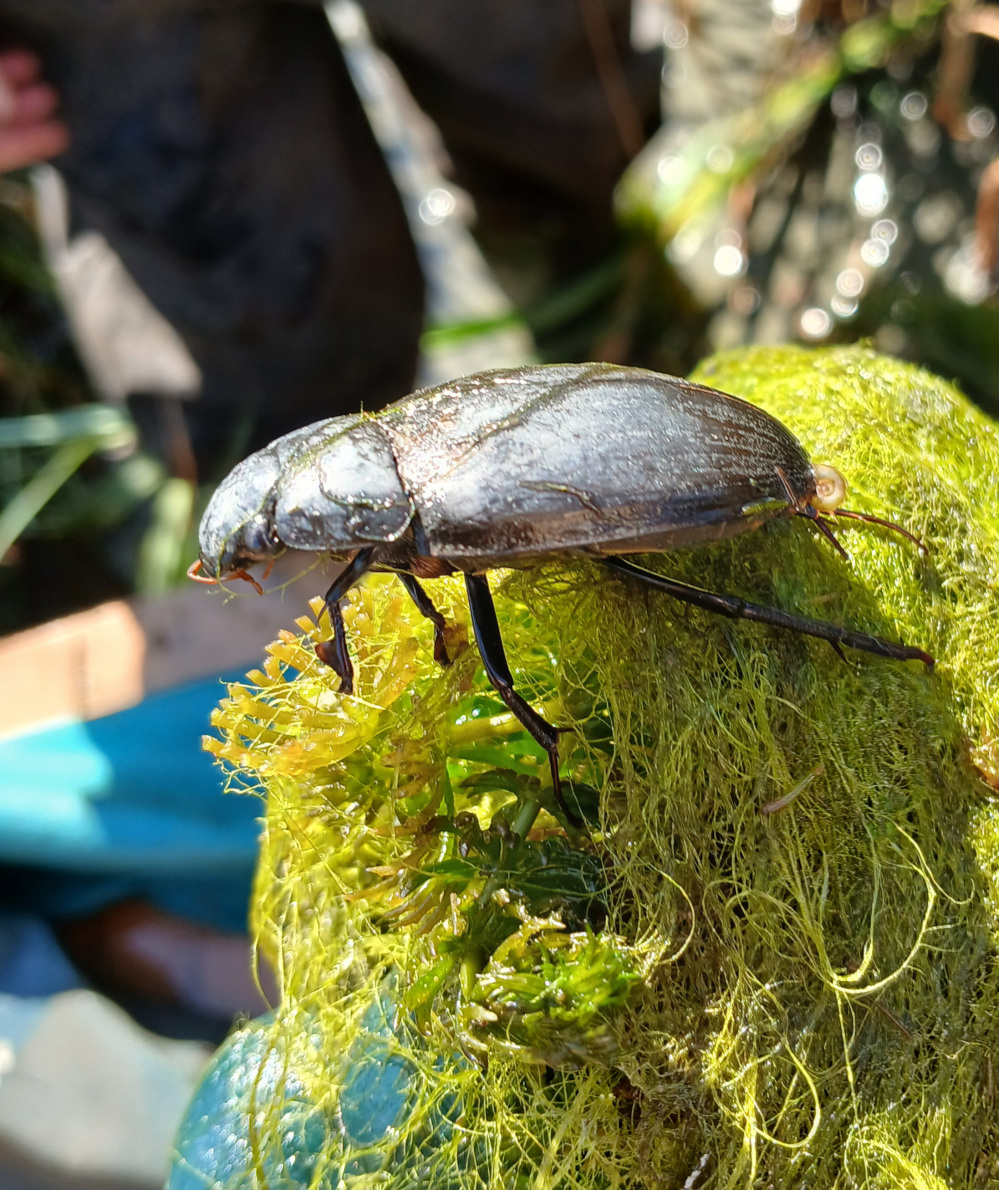
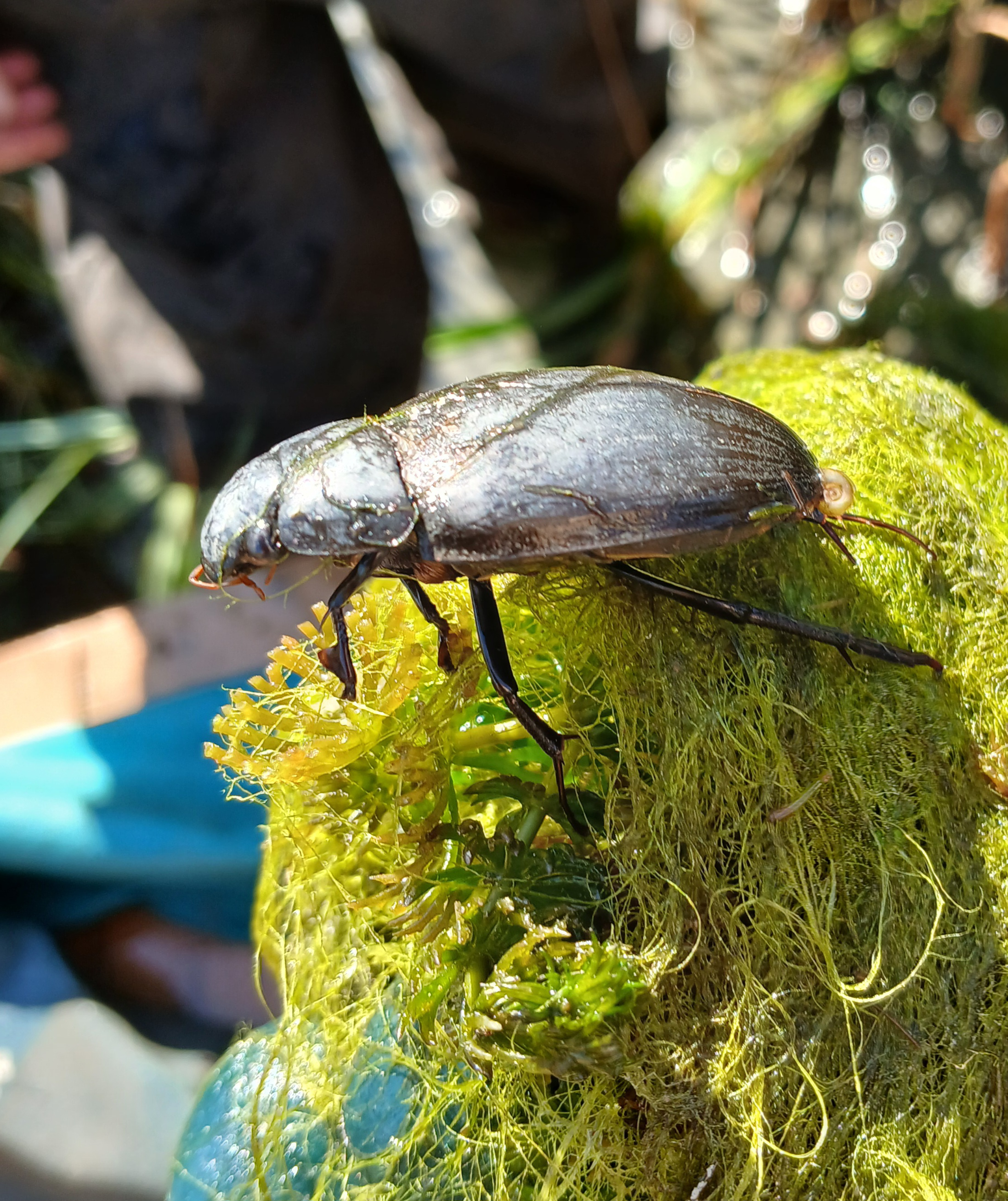
During our April work morning, we found a huge black beetle while weed clearing in the middle pond - a Great Silver Beetle (Hydrophilus piceus) our largest beetle, which predates largely on snails. It is extremely rare in this part of the country due to over-collecting in the past and habitat loss. Therefore - an exciting find! We also recorded four newts.
July 2025
We are delighted to have been awarded a grant from the Wessex Water Foundation Environment Fund. This grant will allow us to undertake environmental DNA sampling to establish whether which species are using ponds at the nature reserve. The Environment Fund supports charitable and community activities across the region that have a positive impact on the local environment. The fund is part of the Wessex Water Foundation which provides dedicated funding for projects across the Wessex Water region every year. Testing is likely to take place through September and during early 2026, depending on species.
February 2025
The new year started with a workday on 4th January when our band of 16 regular and new volunteers gathered on a cold but dry morning to carry on with the scything and raking in the reeds area. It was a concerted effort to get the work completed and to start the bonfire, then keep it going. Another small group continued working on the drainage channels in the meadow, which seem to be showing benefits to the water levels.
Hilary spotted a Common ChiffChaff in the vegetation between the carr and Land Yeo in January. They do not usually reveal their presence until March when they start returning from Africa, it is quite unbelievable that they they have been surviving in the extremely cold spell which suddenly hit the UK in the first two weeks of January. Sub zero temperatures persisted until 13th January.
At the start of February, 14 volunteers worked very hard scything and raking up the fast-growing reeds at the top end of the meadow, which were obliterating the Dogwood saplings planted a few years ago. Identifying and avoiding the saplings was a task in itself. They have all now been tagged. Another small group worked in dreadful conditions to clear the drainage pond of vegetation and increase the drainage channel to get the excess water away from the field.
August 2025
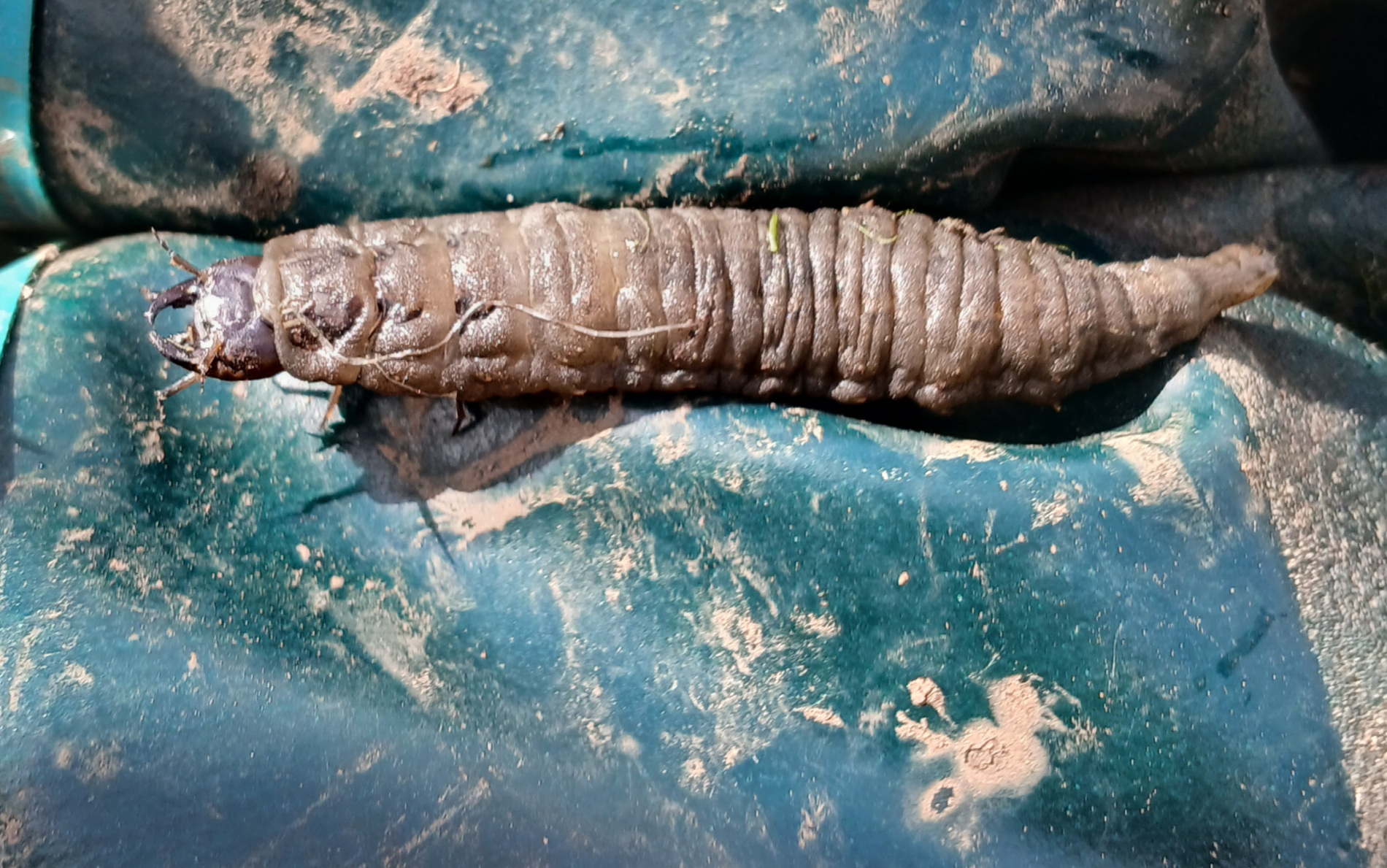
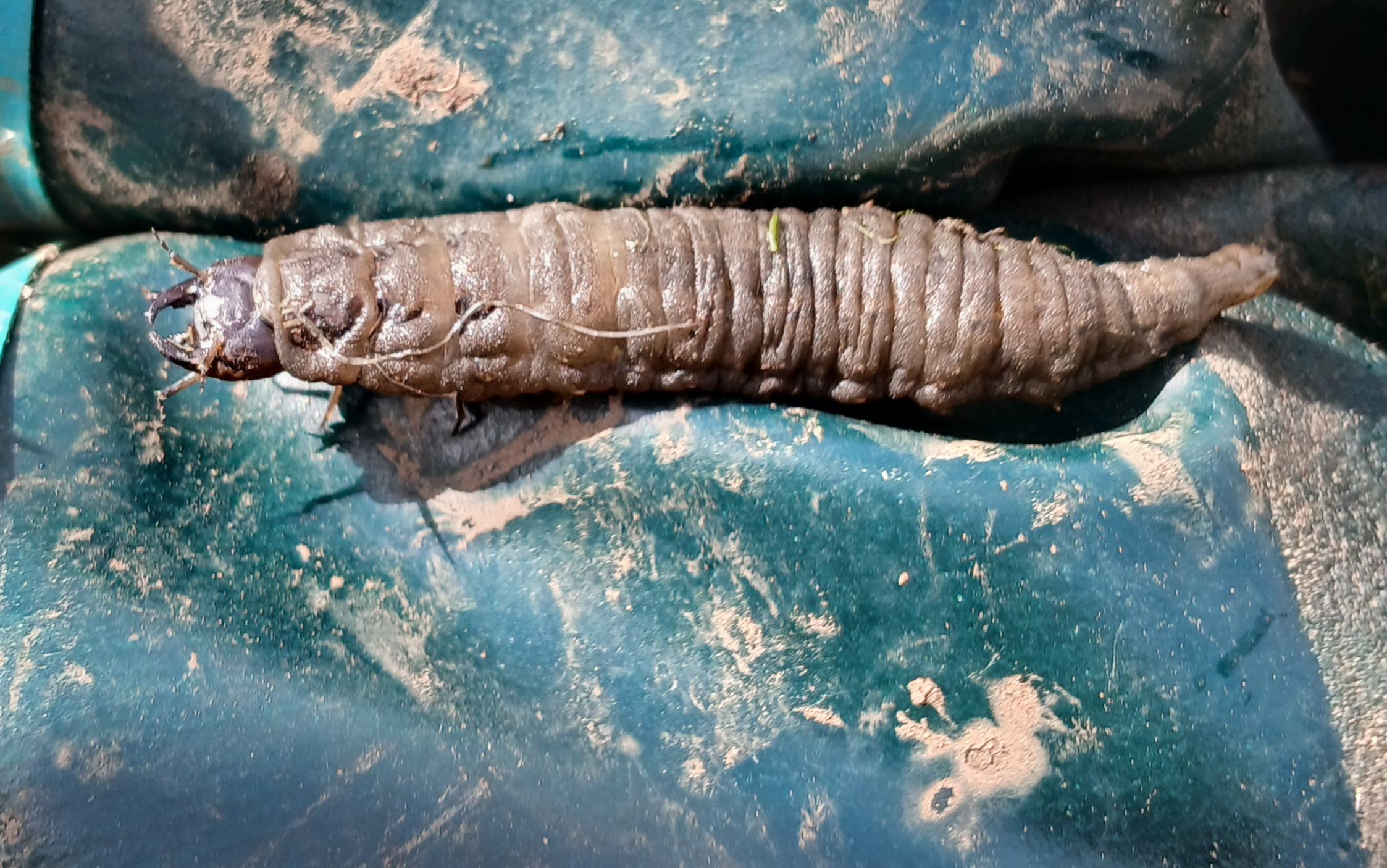
During our August work morning, we found a larva for the Great Silver Beetle (Hydrophilus piceus). We found an adult of the same species in April with a photo further down the page.
November 2025
River Testing for eDNA:
It was decided to use some of our grant money this year and begin some tests for species which might be present in the River Land Yeo. On 25th September samples of water were taken from five different places along the river, mixing them all together and then transferring a sample of that water to some small tubes which were then dispatched to the laboratory. All the kit was provided from “Surescreen Scientifics” apart from an ingenious extendable fishing net with a small plastic bowl fitted in it.
We were hoping for confirmation of the presence of either Water Vole (Arvicola amphibius), the native White Clawed Crayfish (Austropota mobius pallipes) or the non-native Signal Crayfish ( Pacifastacus leniusculus). The White-clawed crayfish is the UK’s only native species of crayfish and is one of our largest freshwater invertebrates. It is a key species of freshwater habitats and an indicator of high water quality. Over the past thirty years, the White-clawed crayfish has become increasingly rare as a result of habitat degradation (they require mineral rich and well oxygenated water) and the introduction of non-native crayfish species, such as the Signal crayfish.
The results showed only the introduced and invasive Signal Crayfish as being present. This was not an unexpected result and probably says something about the state of the river – it looks clear enough but is known to have a high nitrate level due to farming practices. We intend to carry out more testing for other species next year.
Bat Survey:
At the beginning of the month, one of our volunteers set up a Bat detector at Moorend Spout, analysed the results and uploaded them to the North Somerset Citizen Science Bat Survey. We are extremely grateful to her for her time and expertise.
A summary of the results giving numbers of each species recorded over a 6-night period is below. These results are astonishing, with a great diversity of species. All were above the 50% confidence threshold. The mild weather might have accounted for the excellent results:
Count Species
- 1 Brandt's Bat
- 1 Greater Horseshoe Bat
- 1 Whiskered Bat
- 2 Lesser Horseshoe Bat
- 4 Serotine
- 5 Bechstein's Bat
- 5 Daubenton's Bat
- 15 Natterer's Bat
- 24 Leisler's Bat
- 27 Brown Long-eared Bat
- 55 Noctule
- 147 Common Pipistrelle
- 150 Soprano Pipistrelle4 Eurasian Pygmy Shrew
- 11 Dark Bush-cricket
- 12 Speckled Bush-cricket
It is broadly similar to the recording we carried out in September 2023, with the addition of the Whiskered Bat and the Speckled Bush Cricket ( Leptophyes punctatissima) being a new record for the reserve.
© 2026 newtnailsea.org.uk


Moorend Spout
Six acre nature reserve in Nailsea
newt.nailsea@yahoo.com
Find Us
Moorend Spout Nature Reserve
North of Pound Lane, Nailsea BS48 2NN.
The footpath opposite the schools will lead you to the reserve.
Southern reserve entrance (via Pound Lane footpath): ///splash.codes.feared
Northern reserve entrance (via Clevedon Road footpath or from Tickenham): ///races.agents.grab
Registered charity 1216292

